
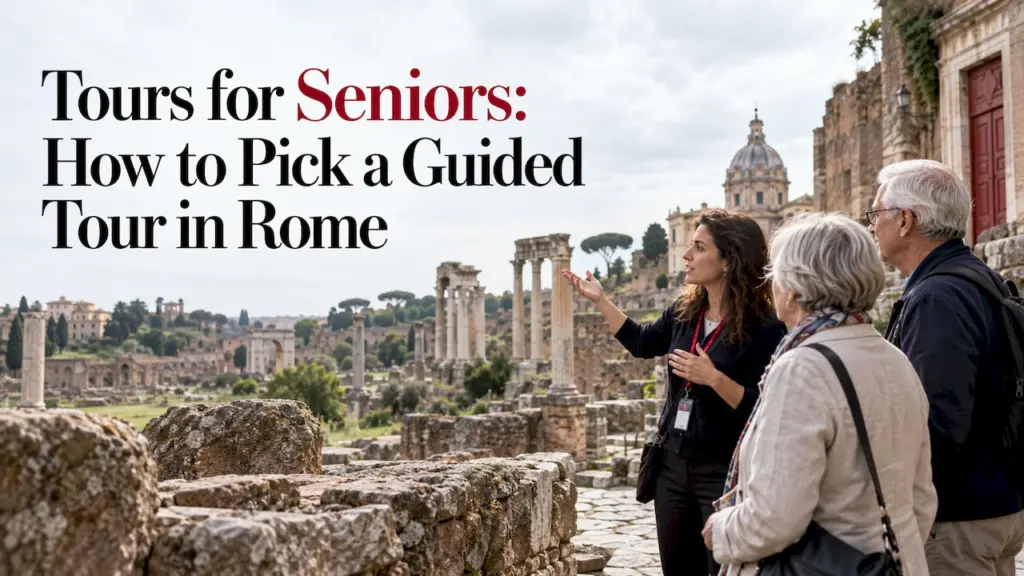
The best tour for a senior traveler is one where someone else handles the logistics, the pace matches your legs, and the longest stretch of the day is spent enjoying the sights rather than standing in line. Rome and Vatican City are a good test of that rule: the sights are spectacular, but the queues, stone floors and long walks can wear anyone down. A skip-the-line ticket or a guided visit with a set start time removes the hardest part. We built our Rome and Vatican tours around that idea, and below you will find how to judge any tour for comfort, what to ask before you book, and how a day in Rome can be arranged to suit an unhurried pace.
TL;DR
- A senior-friendly tour means fewer miles on foot, more time at each stop, seating and restrooms within reach, and a guide who adjusts to the group.
- Check the daily schedule first: pacing can run from days of more than 12 hours to itineraries with plenty of downtime.
- Ask about stairs, cobblestones, hills and elevators in specific terms, and get the answers in writing.
- In Rome, skip-the-line entry and a timed guided visit cut the standing and waiting that tire visitors most.
- Our Rome and Vatican options are fast-track entry tickets, two guided Vatican tours and a hop-on hop-off bus. Current prices are on each product page.
Table of Contents
- What makes a tour senior-friendly
- How to check whether a tour’s pace suits you
- Accessibility questions to settle before you book
- Group size, transport and the guide
- Why Rome rewards the senior traveler who plans
- A sample three-day Rome plan at a gentle pace
- Booking with us
- What the people who have done it value
- FAQ
- Sources
What makes a tour senior-friendly
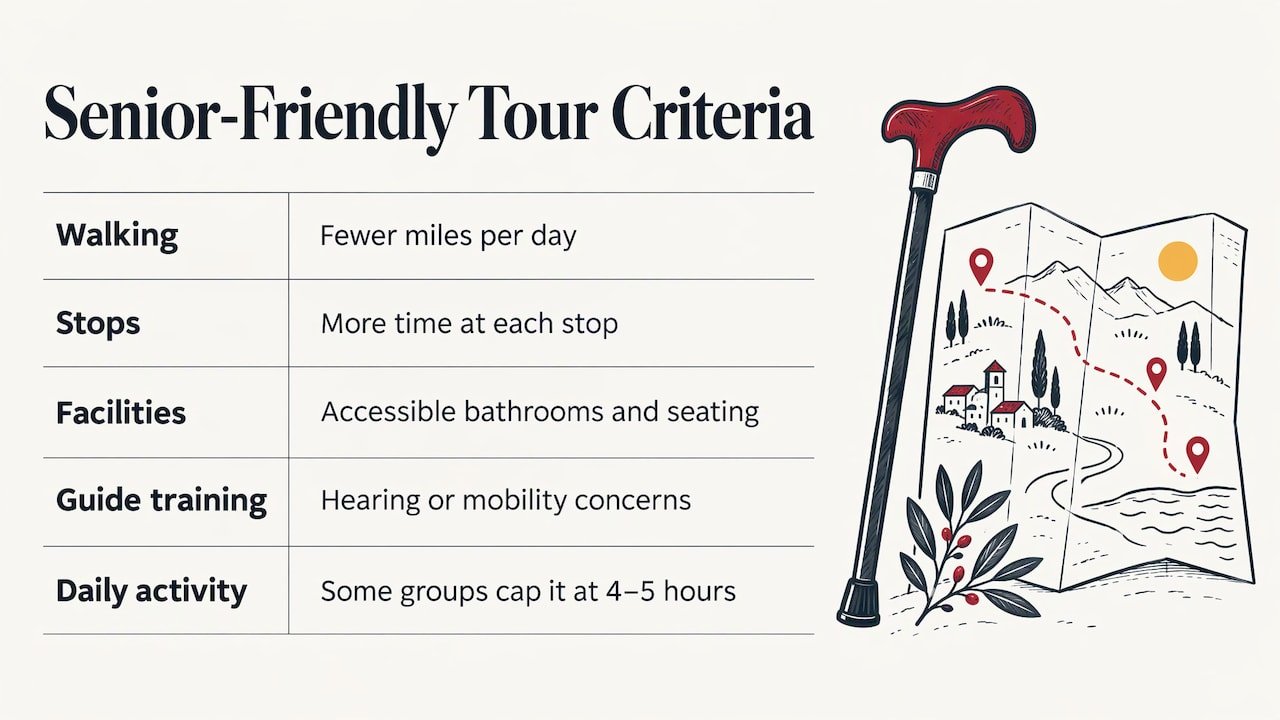
There is no official label, so the phrase means whatever the operator decides. In practice, a tour that works well for older travelers differs from a standard sightseeing day in a few concrete ways. Seniors Info lists them: fewer miles walked per day, more time at each stop, accessible bathrooms and seating, and guides trained to work with hearing loss or mobility concerns. Some groups also cap daily activity at four or five hours.
That last point matters more than it sounds. A tour that packs three major sites into one morning can be perfectly fine for a 30-year-old and exhausting for someone with arthritic knees. The same sites, spread over several shorter outings, are a different experience.
The main types of guided tours
Senior travelers choose among a few formats, and each suits a different temperament:
- Multi-day escorted tours. Hotels, transport and some meals are handled for you. AARP notes that this suits travelers over 50 who want logistical help, disability support or access to difficult destinations.
- Soft-adventure tours. AFAR reports that senior-oriented trips can include hiking, e-biking and kayaking, with activity levels ranging from gentle to challenging.
- City day tours with a guide. One site or one neighborhood, a few hours, a fixed meeting point. This is the easiest format to fit around your energy.
- Private tours. Just your family or friends, so the pace is set by you.
- Hop-on hop-off buses. You see the city from a seat and get off only where you want to.
For a first trip to Rome, the last three formats are usually the most comfortable, because you can add or drop a day as you go.
How to check whether a tour’s pace suits you
The brochure phrase “easy pace” tells you nothing. The itinerary tells you everything. AARP advises reviewing the schedule and the physical-activity level and choosing a tour that matches your comfort and abilities. It also reports that pacing ranges from action-packed days exceeding 12 hours to itineraries with substantial scheduled downtime.
Here is a practical way to apply that advice.
- Count the hours, not the stops. Find the start and end time of each day. If you tire after four hours on your feet, a nine-hour day with a lunch break is still too much.
- Ask for the walking distance. A reasonable operator can tell you roughly how far the group walks between stops and whether it is flat.
- Look at the surface. Cobblestones, ramps and stairs are the real difficulty in older European cities, not distance alone.
- Find the rest points. Where does the group sit down? Are there benches, a cafe stop, a restroom near the end of each visit?
- Check how rigid the plan is. SmarterTravel’s guide suggests comparing physical demands, itinerary rigidity, daily sightseeing load and the guide’s role, and reading reviews for how tour leaders and group dynamics actually worked out.
- Be honest with yourself. AARP frames the choice as a question of fit: schedule, group size, accessibility and a candid read of your own physical capacity.
When a day is too ambitious, the fix is rarely to skip the trip. It is to split the day. In Rome that is easy, as the next sections show.
Accessibility questions to settle before you book
Vague questions get vague answers. Be specific. The UK travel association ABTA’s February 2026 guide recommends that you describe how far you can walk, how many steps you can manage, whether you can handle hills or cobbles, and whether you can transfer from a wheelchair or scooter. It also suggests thinking about access door to door, from transport and accommodation to lifts, restaurants and excursions, and getting written confirmation of any assistance arrangements.
AARP’s advice is similar: ask about elevators, ground-floor rooms, walk-in showers, luggage help, steep hills, cobblestones and long walks between activities, especially outside the United States.
A short list to carry with you:
- How many stairs are there, and is there a lift or ramp as an alternative?
- How far is the walk from the meeting point to the entrance?
- Is the ground flat, paved, or cobbled?
- Where are the nearest restrooms and seats?
- Can the guide slow down or shorten the route if someone needs it?
- What does the confirmation say, in writing?
If you or a companion use a wheelchair or scooter, check the venue’s own rules too. The Vatican Museums, for example, state that visitors with a certified invalidity of at least 67% enter free, with a companion if they are not self-sufficient, with priority entry and no queue. That route is not bookable online: the free tickets are issued on presentation of the certificate at the museums’ desks. The same page says wheelchairs can be hired against an ID and a deposit, that mobility scooters and electric wheelchairs are admitted, and that some areas are closed to them because of space limits. If mobility is a concern, read it before you plan the day.
Group size, transport and the guide
There is no single right group size. AARP says smaller groups can feel more intimate while larger ones offer more social options. SmarterTravel adds that large groups bring social variety and sometimes lower prices but also crowds and slower logistics, while small groups make it easier to talk to the guide and may reach experiences closed to big groups.
For older travelers the trade-off usually comes down to three things:
- Waiting time. Every extra person is another body to count, gather and move. Slow logistics are tiring.
- Hearing the guide. In a crowded museum hall, a smaller group or a guide with a radio system makes a real difference.
- Flexibility. A private tour lets you stop, sit and change the order of the day. A group tour runs to the group’s schedule.
We do not run private tours. Our guided tours are for the Vatican; our other products are entry tickets you use at your own pace, so you can stop and sit whenever you need to.
Why Rome rewards the senior traveler who plans
Rome is one of the most rewarding cities in the world for history lovers and also one of the most physically demanding. Three things cause most of the strain: long outdoor queues, large buildings with many stairs and long corridors, and uneven ancient surfaces. A well-chosen tour deals with the first directly and helps you manage the other two.
Skip the queue, save your energy
The hardest part of a Rome sightseeing day is often not the sightseeing. It is standing in a line in the sun before you even get in. Skip-the-line entry gives you a booked time and a separate entrance, so you spend your energy on the art. That is the core of what we sell: fast-track entry tickets for the Vatican Museums and Sistine Chapel, St. Peter’s Basilica, the Colosseum and Santa Maria Maggiore, and guided tours of the Vatican.
A caution that applies to everyone: security checks still happen. The official St. Peter’s Basilica site notes that security checks at the entrance may cause queues during busy periods. Plan to arrive a little before your slot and keep bags light so screening is quick.
St. Peter’s Basilica: a manageable one-hour visit
The Basilica’s official page describes its guided tour as lasting approximately one hour, with a personalized visiting time, an expert guide and a radio guide, and it leads visitors past Michelangelo’s Pietà and Bernini’s Baldachin. One hour with the highlights is a comfortable length for many older visitors. Our St. Peter’s Basilica Fast-Track Entry with Audio Guide lets you move through at your own pace with commentary in your ear.
The Vatican Museums: the big one
The Vatican Museums are enormous, and the route to the Sistine Chapel is long. This is where a guide earns their fee, because they choose the route, tell the stories behind the masterpieces and keep the group from wandering. Our Vatican Museums, Sistine Chapel and Basilica Guided Tour is led by a guide in English. If you would rather explore without a guide, the Skip-the-Line Vatican Museums & Sistine Chapel Entrance Ticket gets you in at a reserved time.
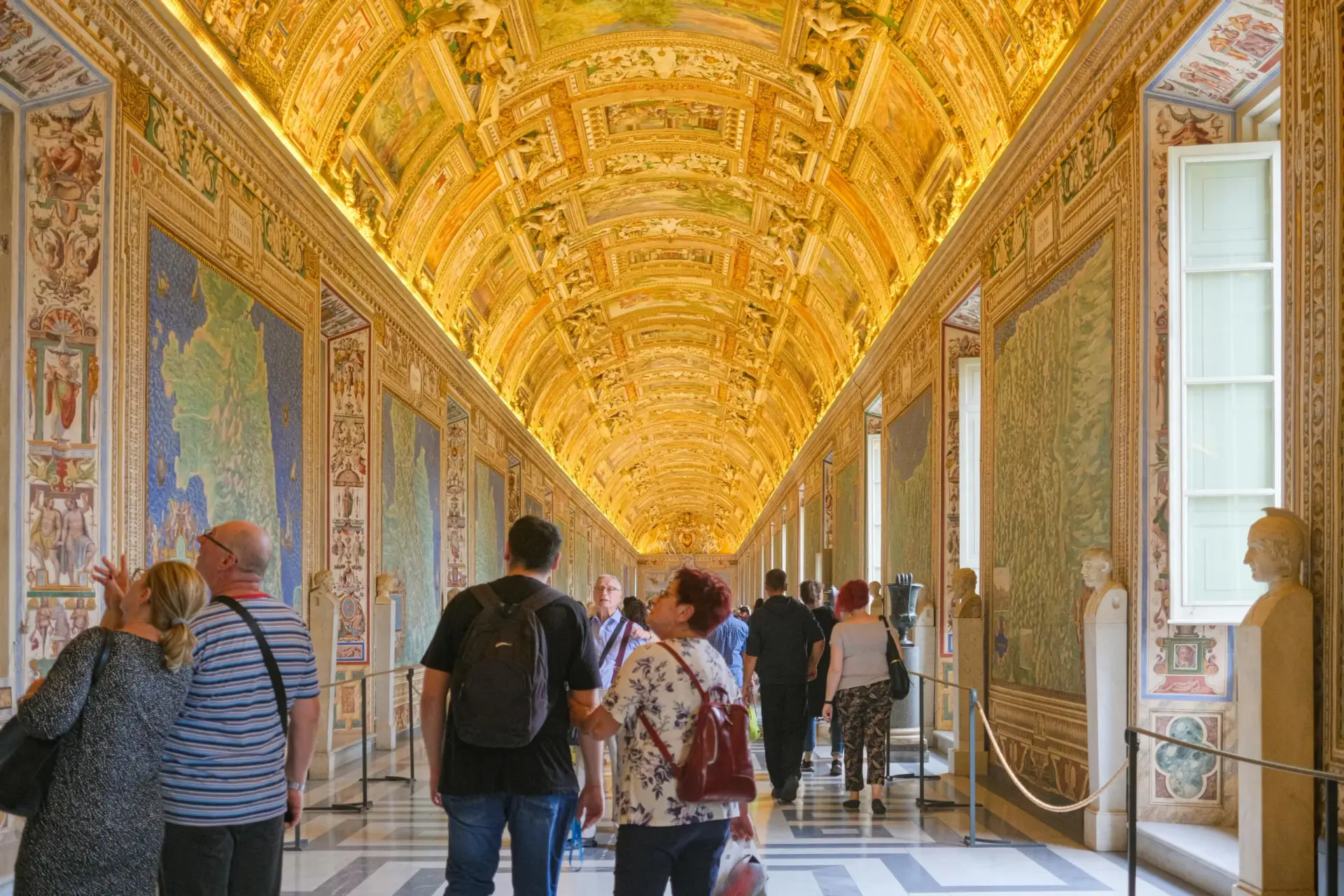
If a full day feels like too much, our Evening Vatican Tour with Sistine Chapel Access is led by a guide in English or Spanish. Choosing a different time of day is one simple way to shape your itinerary around when you feel best.
The Colosseum, Forum and Palatine Hill
This is the most demanding site for walking: ancient paving, slopes and open ground. Our Colosseum, Roman Forum & Palatine Hill Fast Track Entry Ticket is self-guided, and the fast-track entry saves you the queue at the Colosseum itself. Decide in advance how much of the Forum and Palatine you want to cover, and treat the Palatine as optional if hills are a concern. Visitors who want help with mobility should check the official park information and arrangements before the visit.
Santa Maria Maggiore
One of Rome’s four major basilicas, it is a short and rewarding visit. Our Santa Maria Maggiore Fast Track Entry Ticket is a low-effort addition to a day that includes a lunch break.
Seeing the city from a seat
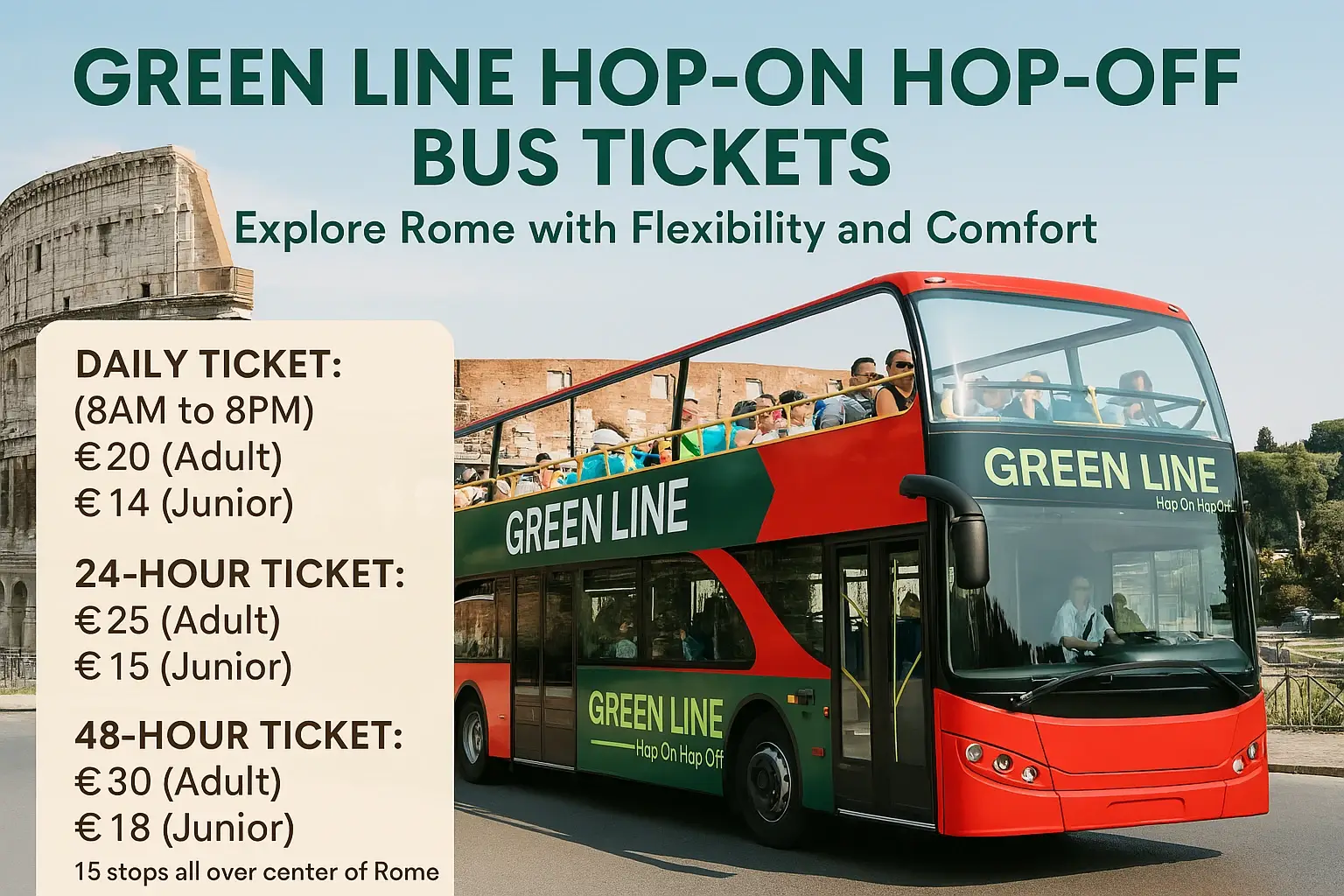
On a rest day, or to get your bearings on arrival, the Green Line hop-on hop-off bus has daily, 24-hour and 48-hour tickets, with an audio guide included. You choose where to get off and where to stay on board.
A sample three-day Rome plan at a gentle pace
A pace that works for many older travelers is one main sight per day, with the afternoon free. Here is an example of how to arrange the offers above.
| Day | Morning | Afternoon | Effort |
|---|---|---|---|
| 1 | Hop-on hop-off bus to get oriented | Rest, a long lunch, a short walk | Low |
| 2 | Vatican Museums, Sistine Chapel and Basilica guided tour | Free; lunch and a rest at the hotel | Moderate |
| 3 | Colosseum, Forum and Palatine fast-track entry | Santa Maria Maggiore fast-track entry | Moderate |
Swap in the evening Vatican tour on day 2 if you prefer to rest during the day and go out later. Keep one free half-day as a buffer. A rainy or tiring day then costs you nothing.
A few practical habits help on every day:
- Wear shoes with a good grip. Roman paving is polished and uneven.
- Carry water and a small snack.
- On a guided tour, tell your guide at the start if you need to go slowly or sit down.
- Check the dress rules for churches before you leave the hotel: shoulders and knees covered.
- Reconfirm your meeting point the evening before.
Booking with us
We sell fast-track entry tickets (some with an audio guide), two guided Vatican tours and hop-on hop-off bus tickets for Rome and Vatican City. Current prices and time slots are on each product page.
You can see every option and book online on our Rome and Vatican tours page. If you want the full experience in the Vatican, start with the Vatican guided tour of the Museums, Sistine Chapel and St. Peter’s.
If anyone in your party has mobility needs, read each site’s accessibility information before you book.
What the people who have done it value
When older travelers talk about why they like guided travel, the same reasons come up: having the planning and logistics taken care of so they can focus on the experience, and traveling with people who share their interests. Solo travelers in particular value a guide who is with the group throughout, as USA Today’s solo-travel feature describes, with formats from historical tours to walking trips.
In a city like Rome, the logic is the same on a smaller scale. A guide who knows the building, a fixed entry time and a clear route let you give your full attention to Michelangelo’s ceiling instead of to the logistics.
FAQ
What is the best type of tour for seniors?
The best tour is the one whose pace matches yours. For a city like Rome, a guided or private visit of a single major site per day, with skip-the-line entry and a free afternoon, is comfortable for most older travelers. Multi-day escorted tours suit those who want hotels and transport handled as well.
How do I know if a tour is senior-friendly?
Look past the label and read the itinerary. Check the daily hours, walking distance, stairs, cobblestones and rest stops, and ask for the answers in writing. Sources such as AARP recommend matching the schedule and activity level to your honest physical capacity.
Are guided tours in Rome and the Vatican suitable for older visitors?
Many are, particularly when you choose a one-site visit with timed entry. The St. Peter’s Basilica guided visit lasts about an hour according to the Vatican’s own page. For the Colosseum, Forum and Palatine, decide beforehand how much walking you want to do.
Do skip-the-line tickets save much walking?
They save standing, not distance. You use a separate entrance at a booked time, so you avoid the long outdoor queue. Security checks still apply, so arrive a little early.
Is a private tour better than a group tour for seniors?
A private tour lets you set the speed and take breaks when you need them, while a group tour often costs less and adds company. Both formats are offered in Rome. We do not run private tours; our guided tours are for the Vatican.
Sources
- AARP: Questions to Select Your Ideal Group Travel Tour
- SmarterTravel: 14 Tips for Choosing the Right Group Tour
- AFAR: How Travel Tours Are Becoming More Accessible to Seniors
- Seniors Info: What Senior-Friendly Tour Groups Actually Offer
- ABTA: Accessible and assisted travel guide
- Vatican Museums: Accessibility
- St. Peter’s Basilica: Guided Tours
- USA Today: How to travel the world solo